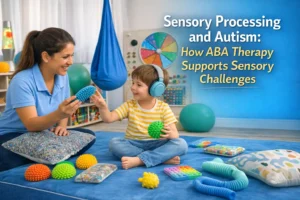
If your child is in ABA therapy, what you really want is for progress to show up in everyday life. You want calmer mornings, smoother playtime, fewer meltdowns, and more meaningful communication at home, at school, and out in the community. Natural Environment Teaching, usually called NET, is an ABA approach designed exactly for that. It takes the science of behavior and places it inside everyday routines so that your child learns in the same places where they will actually use those skills.
RenaSer ABA Therapy in West Palm Beach, FL, focuses on ABA services for children on the autism spectrum and children with additional developmental support needs. Their team designs individualized programs that combine evidence-based ABA methods with a warm, family centered approach so that progress is not limited to a therapy room but can be seen in real daily life.
What is Natural Environment Teaching?
Natural Environment Teaching is an ABA approach where teaching happens within the activities and places that are already meaningful for your child, such as playing with toys on the floor, having a snack in the kitchen, getting dressed, or going to the park. Instead of stopping those activities to “do therapy,” the therapist joins what your child is already doing and turns that moment into a carefully planned learning opportunity.
In NET, the natural setting becomes the classroom. If your child loves cars, a therapist might sit on the floor and play with them, using that interest to practice requesting, naming colors, taking turns, or following simple directions. If your child reaches for a snack, that moment becomes a chance to work on asking for “more,” “help,” or the name of the food. The activity itself is part of the reward, which helps keep motivation high.
Even though NET feels relaxed and playful, it is still structured and data driven. A Board Certified Behavior Analyst (BCBA) at RenaSer sets clear goals based on your child’s strengths and needs, then therapists look for or create natural situations where those goals can be practiced. They track how often skills appear, how much help is needed, and how those behaviors change over time. This keeps the approach flexible and individualized while grounded in the science of ABA.
Why Natural Environment Teaching is effective?
NET is effective because it teaches skills in the same context where your child will actually use them. When a child learns to ask for help during a real moment of frustration, or practice sharing while really playing with a sibling, it becomes much easier for that behavior to appear again later without heavy prompting.
Research on naturalistic developmental behavioral interventions, which include approaches like NET, shows that teaching in natural settings supports gains in communication, social interaction, and adaptive daily living skills, especially for young children on the autism spectrum[1] . These interventions are most powerful when started early and when parents are actively involved in using the same strategies at home.
NET also takes advantage of natural motivation. Your child is not working only for stickers or tokens. They are working to keep playing, to go outside, to get a favorite snack, or to be understood. That makes learning feel more meaningful and less like a disconnected task.
Another reason NET works well is that it supports generalization. One of the classic challenges in classic challenges during ABA therapy[2] is that a child might succeed during structured practice but struggle to use the same skill at home or in school. Since NET is built directly into everyday routines, the skill is already practiced in the familiar environment, which makes it more likely to stick.
Finally, for many children, NET simply feels more comfortable. Some children become stressed or shut down in very rigid, table-based sessions. A naturalistic setting allows the therapist to follow the child’s interests and energy level while still moving toward measurable goals. For families, this often feels closer to “real life” and makes it easier to notice progress in daily routines, not only in session notes.
How Does Natural Environment Teaching Work?
Behind the scenes, NET follows a clear and thoughtful process. A BCBA first spends time understanding your child: what they enjoy, what is difficult for them, how they communicate, and what daily routines look like at home and in other settings. Favorite toys, games, foods, and activities are not just extra details. In NET, they become the main tools for teaching.
Together with the family, the BCBA chooses goals that can naturally fit into those routines. For example, during playtime the team might focus on asking for a toy, imitating actions, or taking turns. During getting dressed, they may work on following two step directions, naming clothing items, or putting on shoes with less help. During mealtimes, they may target asking for more, trying a new food, or sitting at the table for a specific period.
In a NET session, the therapist enters the child’s world rather than pulling them out of it. They might wait for the child to show interest in something, then pause for a moment so the child has a chance to communicate. If the goal is to request, the therapist may model a word, gesture, sign, or button press on a communication device, then gently prompt the child to try. As soon as the child makes an attempt, they receive access to what they want along with praise or other positive feedback.
During all of this, data is still being collected. The therapist notes how often the child uses the skill, whether prompts were needed, and how consistently the child responds. The BCBA then reviews this information and adjusts the plan so that the program stays effective and truly individualized to your child.
Family participation is a key part of making NET successful. In a setting like RenaSer ABA Therapy, parents and caregivers are guided to use similar strategies during their own routines. That way, getting dressed, bath time, grocery shopping, or walking to the car can all become natural opportunities to practice the same skills that are being targeted in therapy.
Example Scenarios
Imagine snack time in your kitchen. Your child goes to the cupboard and reaches up toward a favorite snack. Instead of simply handing it over, the therapist pauses and waits for any sign of communication, maybe a sound, a word attempt, a sign, or a picture exchange. They model the word or phrase they are targeting, such as “chips” or “I want chips,” and help your child use it. The moment your child tries, they get the snack. Over many repetitions, your child understands that using language or their communication system is the most reliable way to get what they want.
Now picture playtime on the floor. Your child is lining up cars or stacking blocks. The therapist joins in and adds short, meaningful challenges, such as asking your child to say “car,” “red car,” or “my turn” before continuing. They might gently block access to a favorite piece just long enough to encourage a request, then immediately respond. At the same time, they can model and prompt turn taking with a sibling or peer, which helps build early social skills in a way that feels like play instead of a test.
Think about getting ready to go outside. Your child needs shoes, maybe a jacket, and their backpack. The therapist turns this into a chance to practice following directions and building independence. They might say “Get your shoes then come to the door,” or help your child learn to bring everything needed before leaving. They can also work on words such as “go,” “park,” or “ready,” which make transitions clearer and less stressful.
You can even imagine a short community outing. On the walk to a nearby park, the therapist can practice responding to the child’s name, stopping at corners, staying close to an adult, and greeting familiar people. At the playground, your child can practice asking for “swing,” “slide,” or “help,” and can learn to say “all done” before leaving. Each of these moments is therapy, but it feels like regular life.
Benefits of Natural Environment Teaching
One of the biggest advantages of NET is that it closes the gap between “therapy skills” and “daily life skills.” Because your child practices in the same places and activities where they naturally live, skills are more likely to show up when you need them. Families often notice improvements in everyday routines rather than only seeing progress in data sheets.
Another benefit is engagement. Children are usually more willing to participate when therapy happens during activities they already enjoy. The things that naturally matter to them, such as going outside, playing with a favorite toy, or having a snack, become the rewards that keep learning moving. This can be especially helpful for children who struggle with long, highly structured sessions.
NET also supports spontaneous communication. Instead of waiting for adults to ask questions, children have many chances to initiate. They learn that their words, signs, or device buttons actually change their environment, which can be very empowering. Over time, that sense of control can reduce frustration and challenging behavior, because the child has more ways to express what they want or need.
Daily living skills can improve as well. When a child practices brushing teeth in their own bathroom, putting toys away in their own room, or helping set the table in their own kitchen, each step feels connected to its purpose. With the support of ABA strategies such as prompting, shaping, and reinforcement, many children gradually need less help and become more independent in these routines.
For families in West Palm Beach and the surrounding area, there is also the practical benefit that a provider like RenaSer can bring these evidence-based strategies into home and community settings, not only into clinic-based sessions. That makes it easier to keep everyone on the same page and gives parents tools they can use long after a therapist leaves.
How Natural Environment Teaching Differs from Other ABA Approaches?
Natural Environment Teaching is one of several ways to deliver ABA. The main differences between NET and other common approaches are how structured the setting is and how planned each trial looks from the outside.
In a more structured format known as Discrete Trial Training, or DTT, skills are broken down into small steps and practiced in short, repeated trials. The therapist gives a clear instruction, the child responds, and the therapist provides reinforcement or corrective feedback right away. This approach has a strong evidence base and is especially useful for teaching foundation skills that benefit from many repetitions, such as early language, matching, or following simple instructions.
In Natural Environment Teaching, the structure is less visible because it is woven into daily moments. The therapist still knows what they are teaching and how they will respond, but the activities are child led and flexible. Instead of having a block of time at a table, teaching moments are distributed across the day during play, routines, and outings.
Current research suggests that combining structured and naturalistic approaches can be especially effective for young children with autism. One study that compared DTT, NET, and a combination of both for toddlers found that children who received NET and the blended approach showed stronger improvements in adaptive behavior and decreases in barriers than those who received DTT alone, while DTT still played an important role in building early foundation skills.
At RenaSer ABA Therapy, the choice is not “only NET” or “only DTT.” Instead, BCBAs design a treatment plan that uses each approach where it is most helpful. A child might first learn a new word through structured practice, then practice using that word naturally during snack time or play. This balance allows therapy to be both efficient in teaching and powerful in real world application.
Key Skills Taught Through NET
Because NET is anchored in daily routines and meaningful activities, it can support a wide variety of goals. Communication is one of the most common areas. Children can practice asking for items, saying “help,” making comments about what they see, or using a speech device while they are actually interacting with those items and people. This helps them understand that communication has a clear purpose and immediate effect.
Social skills also fit naturally in NET. During play, children can learn to take turns, wait for a friend, join ongoing play, or respond when someone calls their name. When peers are present, the therapist can coach social interactions instead of only practicing with adults, which makes the learning feel more authentic and prepares the child for school and community settings.
Daily living skills are another important area. Routines like handwashing, brushing teeth, getting dressed, or helping with simple chores are easiest to learn in the places where they actually happen. In NET, the therapist breaks those routines into small, manageable steps and uses prompts and reinforcement to help the child complete more and more of the routine independently. Over time, these small gains add up to greater independence and confidence.
NET can also support emotional regulation and flexibility. Because it takes place in real moments, therapists can help children cope with transitions, waiting, and small disappointments by teaching them to use visual schedules, ask for a break, or accept “all done” in a safe and supportive way. These skills are essential for reducing challenging behavior and making everyday life feel more predictable and manageable.
Conclusion
Natural Environment Teaching takes the core principles of ABA and places them where life actually happens. Instead of keeping learning at a table, NET turns snack time, bedtime, playtime, and community outings into opportunities for real growth. It helps children build communication, social, and daily living skills in the settings that matter most, which makes those skills more likely to last.
For families in West Palm Beach, FL, RenaSer ABA Therapy integrates NET into individualized ABA programs for children on the autism spectrum and related developmental needs. Our team of BCBAs and therapists combines structured teaching methods and naturalistic strategies so that progress is both measurable and meaningful in your child’s everyday life.