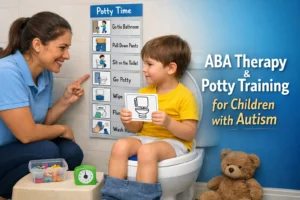
Early childhood is a period of fast growth, fast learning, and constant change. For children on the autism spectrum, those early years can also be an especially meaningful time to build communication, play, social engagement, independence, and daily living skills. That is why early intervention matters so much. It is not about rushing childhood or expecting a child to develop in the same way as anyone else. It is about recognizing that support offered early can help children build useful skills during a stage when learning pathways are especially responsive.
The hardest part for most families is not deciding whether support matters. It is understanding what early intervention actually means, how ABA fits into the bigger picture, what early signs may be worth discussing with a professional, and how to access services without feeling overwhelmed. A clear explanation can make those first steps feel much more manageable.
For families who want practical guidance rooted in meaningful daily progress, RenaSer ABA Therapy helps turn early intervention goals into individualized, family-centered plans that support learning at home and beyond.
What Is Early Intervention for Autism?
Early intervention generally refers to services provided during the early years of life, often from birth to age 5, when developmental differences begin to affect communication, social interaction, play, behavior, or adaptive functioning. It is a broad term, and that distinction matters. Early intervention is not one single therapy. It is a category that can include different kinds of support depending on the child’s needs.
In practice, early intervention may include:
- speech therapy
- occupational therapy
- developmental therapy
- early childhood special education
- family coaching
- behavioral intervention
- support for play, communication, and adaptive skills
Within that larger category, there is also a more specific ABA-based model often called Early Intensive Behavioral Intervention, or EIBI. EIBI is a form of early ABA therapy designed for young children on the autism spectrum and is typically delivered at a higher intensity over a longer period of time.
That difference is important for families to understand. General early intervention is the broad umbrella. EIBI is one specific, intensive ABA-based approach within that umbrella. Some children benefit from focused ABA with a smaller number of clearly defined goals. Others benefit from a more comprehensive early intensive model that addresses communication, play, adaptive skills, learning readiness, and behavior across many parts of daily life.
A simple way to think about it is this:
| Type of support | What it usually means |
| General early intervention | A broad range of developmental services in the early years |
| ABA-based early intervention | Behavioral support focused on communication, learning, adaptive skills, and behavior |
| EIBI | A comprehensive, intensive early ABA model often used for young children who need broad support |
The most useful question is not which label sounds best. It is which kind of support best matches the child’s current needs, strengths, and daily challenges.
The Science Behind Early ABA Therapy
Early intervention receives so much attention because of what we know about child development and because of a large body of research showing that support provided during the toddler and preschool years can improve meaningful outcomes over time.
Neuroplasticity: Why the Early Years Matter So Much
During early childhood, the brain develops at an extraordinary pace. In simple terms, neuroplasticity refers to the brain’s ability to change, adapt, and strengthen neural pathways through experience. That ability does not disappear later in life, but the early years are especially important because development is happening so rapidly.
This is one reason early support can be so valuable. When communication, imitation, play, attention, and adaptive skills are addressed during these years, children often have more opportunities to practice and strengthen those pathways while development is highly active.
That does not mean support stops mattering after age 5. It does not mean a family has missed the opportunity if services begin later. It means the early years offer a meaningful chance to build foundational skills while the brain is especially responsive to learning and experience.
That is an encouraging message for families. Early intervention is not about fear. It is about possibility.
Research on Early Intensive Behavioral Intervention (EIBI)
EIBI has one of the longest research histories among autism interventions. The earliest intensive behavioral studies brought major attention to the idea that young children on the autism spectrum can make meaningful gains when support is individualized, structured, and delivered consistently. Since then, later reviews and meta-analyses have continued to examine outcomes across different studies and programs.
The overall picture from the research is that early intensive ABA-based intervention has been associated with gains in areas such as:
- intellectual functioning
- adaptive behavior
- language development
- learning readiness
- daily living skills
It is important to present that evidence honestly. Not every child will respond in the same way. Outcomes vary. Progress can look different across children depending on learning profile, starting skills, intensity of services, family involvement, and the quality of the program itself.
Still, the practical takeaway for families is meaningful: early intensive ABA has a real research base behind it, and for many young children it can support growth in areas that matter in daily life.
Long-Term Outcomes of Early vs. Later ABA Therapy
Families often ask whether it really makes a difference to begin earlier. In general, earlier identification and earlier support often give children more time to build foundational skills before academic, social, and adaptive demands become more complex.
A child who begins support around ages 2 or 3 may have more time to work on communication, attention, play, flexibility, and daily routines before entering a more demanding school environment. A child who starts later can still make meaningful progress, but they may be building those same foundations while that school expectations are already increasing.
This should be framed helpfully. Earlier does not mean “too late” if a child is identified later. It means that when support begins sooner, families often have more time to strengthen skills before other demands become heavier. That is not a pressure-based message. It is simply a practical reason why timely support can be so valuable.
Signs That Your Child May Benefit from Early ABA Intervention
Families do not need to wait until every sign becomes significant before asking questions. Sometimes the earliest clues appear in communication, social interaction, play, flexibility, or repetitive behavior. These signs do not automatically confirm autism, but they can suggest that a developmental evaluation and early support may be helpful.
Communication Signs Before Age 3
Communication concerns are often one of the first reasons families begin seeking answers. Some early signs that may be worth discussing with a professional include:
- no babbling by 12 months
- no single words by 16 months
- no spontaneous two-word phrases by 24 months
- very limited gestures such as pointing, waving, or reaching to request
- difficulty using sounds or words to get needs met
- loss of language or social communication skills at any age
These signs matter because communication is one of the biggest foundations for early learning. When a young child has trouble requesting, sharing attention, or expressing needs, frustration can increase and opportunities for social learning may become harder to access.
Social Interaction Concerns
Some families first notice differences in how their child connects socially. A child may seem content playing alone, but social communication and shared attention may not be developing in the expected way.
Possible early social signs may include:
- limited or inconsistent eye contact
- not responding to name reliably
- not showing objects to others to share interest
- limited imitation during play
- reduced interest in back-and-forth interaction
- not looking where another person points
- not bringing others into play in simple ways
A useful visual summary may help:
| Area | Early signs families may notice |
| Communication | No babbling by 12 months, no words by 16 months, no two-word phrases by 24 months |
| Social interaction | Limited eye contact, not responding to name, limited shared attention |
| Play and behavior | Repetitive play, strong distress around change, unusual focus on parts of objects |
These patterns do not mean families should panic. They mean the child may benefit from developmental evaluation and, when appropriate, early supportive services.
Repetitive Behaviors and Restricted Interests
Repetitive behaviors and restricted interests are another area families may notice early. These may include:
- repeated body movements
- strong interest in spinning, lining up, or repetitive play patterns
- unusual focus on parts of toys rather than the whole toy
- intense distress when routines change
- very strong preference for sameness
- repetitive sensory interests
These behaviors vary from child to child. Some are mild. Others interfere more directly with communication, play, flexibility, or participation in daily routines. Early ABA can be especially helpful when these behaviors make it harder for the child to engage, learn, transition, or communicate.
What Does Early ABA Therapy Look Like?
Families often hear “early ABA” and imagine a rigid, table-based program all day long. In reality, high-quality early ABA should be individualized, developmentally appropriate, and closely connected to the child’s real needs. For young children, especially toddlers and preschool-aged children, therapy should often look engaging, play-based, and purposeful.
Comprehensive vs. Focused ABA Programs
Early ABA programs are not all the same. A comprehensive ABA program usually addresses many domains at once, such as:
- communication
- play
- social engagement
- adaptive behavior
- learning readiness
- early academic foundations
- behavior reduction when needed
This is often the type of model associated with EIBI and may involve a higher number of weekly hours.
A focused ABA program is narrower. It targets a smaller number of specific goals, such as:
- functional communication
- toileting
- transitions
- play expansion
- reducing a particular challenging behavior
- improving daily routines
A simple comparison looks like this:
| Program type | Typical focus | Common intensity |
| Comprehensive ABA / EIBI | Communication, play, adaptive skills, readiness, social engagement, behavior | Often 20 to 40 hours per week |
| Focused ABA | A smaller number of specific goals such as communication, transitions, or toileting | Lower and more individualized hour ranges |
The right model depends on the child, not on a one-size-fits-all formula.
A Typical Day in an Early Intervention ABA Program
A good early intervention ABA session should feel purposeful without feeling joyless. For young children, therapy should often include a mix of structure, play, movement, communication opportunities, and daily life routines.
A typical day in an early intervention program may include:
- arrival and transition routines
- greeting and communication practice
- play-based learning
- imitation and attention-building
- early learner activities such as matching or following directions
- snack and self-help routines
- opportunities for social interaction
- movement breaks
- transition practice
- caregiver updates and generalization planning
At a center like RenaSer ABA Therapy, an early intervention program for preschool-aged children can be structured, data-driven, and individualized while still feeling warm, playful, and developmentally appropriate. The goal is not to push a child through drills all day. The goal is to create many well-planned opportunities for learning within routines that make sense for that age.
The Role of Parents in Early Intervention
Parents play a central role in early intervention. Therapy does not only matter during sessions. It matters during meals, playtime, dressing, transitions, errands, outings, and family routines. A strong early ABA program should include caregiver involvement so families understand what is being taught and how they can support those same skills at home.
Parent involvement may include:
- learning how to reinforce communication
- supporting routines and transitions
- practicing new skills in daily life
- helping generalize therapy gains beyond sessions
- understanding how to respond consistently to challenging behavior
- learning what to watch for and what progress may look like
This does not mean parents need to become therapists. It means they are a key part of how early gains become meaningful in daily life. When parents feel supported, the child often has more chances to practice new skills naturally throughout the day.
How to Access Early ABA Therapy Services
Families often know they want help before they know how to get it. That process usually becomes easier when it is broken into smaller steps.
A simple path may look like this:
| Step | What families can do |
| 1 | Talk with the pediatrician about developmental concerns |
| 2 | Request a developmental evaluation |
| 3 | Confirm diagnosis and recommendations when appropriate |
| 4 | Review insurance or funding options |
| 5 | Choose an ABA provider that fits the child and family well |
Getting an Autism Diagnosis
A formal diagnosis is often the first step in accessing ABA services, especially through insurance. If a child is showing developmental differences, families can begin by talking with their pediatrician and requesting evaluation and referral.
It can help to bring specific examples, such as:
- communication concerns
- social interaction differences
- repetitive behaviors
- difficulties with play
- strong reactions to change
- delays in daily living skills
The goal is not to wait and see forever if concerns are already clear. The goal is to begin the evaluation process early enough so that supportive services can be considered in a timely way.
Insurance Coverage and Funding Options
Coverage depends on the child’s insurance plan and funding pathway. In general, families may access ABA through:
- private insurance
- Medicaid
- CHIP-related pathways
- state-specific funding structures
- school-based systems for certain services
The most practical next step is usually to verify benefits directly with the insurer and ask:
- Is ABA covered under this plan?
- Is prior authorization required?
- What diagnostic documentation is needed?
- Are parent training services included?
- What providers are in network?
- Are there limits on weekly hours?
This part of the process can feel confusing, but it often becomes easier once families know which questions to ask. Even a short insurance call can save families a great deal of time and uncertainty later.
Choosing the Right ABA Provider
Not every ABA provider offers the same quality of care. Families should look for more than the label “ABA.” What matters is how the program is delivered and whether it fits the child.
Important things to look for include:
- BCBA supervision
- individualized treatment planning
- family involvement
- data-based decision making
- goals that connect to daily life
- developmentally appropriate teaching
- a respectful and engaging style
- clear communication with caregivers
This is where provider quality matters just as much as the therapy type itself. For families looking for early intervention services that emphasize individualized planning, family partnership, and practical progress, RenaSer ABA Therapy offers early ABA support designed around meaningful developmental goals.
Early Intervention Programs in West Palm Beach
For preschool-aged children, early intervention works best when therapy is carefully matched to developmental level, communication needs, and family priorities. In a center-based program, this can include structured play, communication teaching, early learner routines, adaptive skills, and supported opportunities to build social participation.
At RenaSer ABA Therapy in West Palm Beach, early intervention programs for young children are designed to help families build those foundational skills during a period when support can make a meaningful difference. For families exploring what early ABA could look like for a preschool-aged child, a helpful next step is to begin with an individualized conversation about goals, readiness, and what kind of program fit makes the most sense.
FAQ
What is early intervention for autism?
Early intervention refers to services provided during the early years of life, often from birth to age 5, when developmental differences begin to affect communication, social interaction, behavior, play, or adaptive skills.
What is the difference between early intervention and EIBI?
Early intervention is the broad category of services for young children. EIBI is a specific intensive ABA-based model within that broader category, usually designed for young children who need comprehensive support across many skill areas.
What age is best to start ABA therapy?
Earlier support is often helpful because the early years are a meaningful period for learning and development. That said, support can still make a positive difference later as well. Earlier does not mean urgent pressure. It means useful opportunity.
Does my child need an autism diagnosis before starting services?
In many cases, a formal diagnosis is needed before insurance-funded ABA services can begin. A pediatrician or qualified specialist can help guide the evaluation process when developmental concerns are present.
How many hours of early ABA does a child usually receive?
That depends on the child’s needs and the type of program. Comprehensive early ABA programs often involve a higher number of hours, while focused ABA programs may involve fewer hours centered on a smaller number of goals.