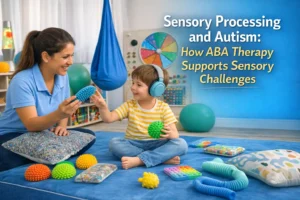
When a child or teenager who belongs to the autism spectrum has powerful reactions, shouts or seems to “explode” over something that looks small from the outside, families naturally look for explanations. Is this anger, a meltdown, a behavioral issue or something else entirely? Many parents search phrases like “autism and anger issues” to understand what is really going on and how to respond in a way that is calm, effective and respectful.
Research and clinical experience show that intense reactions are very common in children and adults on the autism spectrum and usually have understandable roots: sensory overload, communication barriers, changes in routine or other co-occurring challenges that affect how the nervous system handles strong situations. Understanding those roots does not remove every difficult moment, but it gives families a clearer map and more tools to support their child.
If you would like a professional team to help you understand these patterns and build step-by-step behavioral support strategies for daily routines, RenaSer ABA Therapy can work alongside your family so that school, home and therapy move in the same direction.
Why Are Anger Issues Common in Autism?
Strong reactions in children and adults on the autism spectrum are not random. They usually appear when the demands of the situation are higher than the person’s current skills or resources at that moment. For example, a child might cope well in a quiet room but react strongly in a noisy supermarket, or manage one change in routine but not three changes in the same afternoon. These reactions are often signals that something in the environment or in the internal experience needs adjustment.
From a scientific perspective, studies link challenging behavior in autism with several factors: differences in sensory processing, communication, flexibility and how the nervous system responds to strong situations over the day. These elements interact with everyday demands at home and at school. When the gap between demands and skills becomes too wide, the risk of intense reactions increases.
It is very important to remember that these reactions are not signs of “bad character” or lack of interest in cooperating. They are usually a mixture of overload, communication difficulties and coping skills that are still developing. Seeing anger as a signal rather than a defect helps families respond with curiosity and support instead of blame.
Sensory Overload and Frustration
Many people who belong to the autism spectrum process sounds, lights, textures, movement and smells in a different way. For some, ordinary noises like vacuum cleaners, school bells or crowded cafeterias can feel extremely intense. For others, bright lights, strong smells or the feeling of certain clothes can be very uncomfortable.
When the brain receives too much sensory information at once, it can become difficult to focus, follow instructions or stay calm. In those moments, even a small extra demand (“put your shoes on now”, “hurry up”, “finish this worksheet”) can be the final trigger for what looks like sudden anger. From the outside, it may seem that the reaction came “out of nowhere”, but from the inside it often follows a long period of sensory effort.
Over time, repeated sensory overload can also create patterns of anticipation: a child may react strongly before entering a noisy place because their body remembers previous discomfort. Understanding this helps families focus on prevention: adjusting environments, offering headphones, sunglasses or clothing options and building quiet breaks into the day.
Communication Barriers
Communication is another key factor. When a child or teenager has difficulty expressing what they need, what hurts or what is confusing, small frustrations can accumulate quickly. If they cannot easily say “I need help”, “this is too loud” or “I don’t understand this homework”, behavior becomes the main way to show that something is not working.
These communication barriers can appear in different forms: limited spoken language, trouble finding the right words in the moment, challenges understanding complex instructions or delays in processing what others say. In all these situations, the person may understand more or less than adults think, creating misunderstandings on both sides.
ABA-based strategies and speech-language support can work together to expand functional communication: using words, pictures, gestures or devices to request, refuse, ask for breaks or explain basic needs. As communication options grow, many families notice a parallel reduction in intense anger episodes, because the child now has more precise tools to express discomfort before it explodes.
Difficulty With Transitions and Routine Changes
Another common source of anger in autism is change. Many people on the spectrum rely on predictable routines to feel safe and oriented. Sudden transitions (stopping a preferred activity, changing classroom, leaving the park) or unexpected changes in plans (a cancelled outing, a different teacher, a new route) can feel disorganizing and sometimes overwhelming.
In those moments, the person is not only reacting to the change itself, but also to the feeling of losing control over what happens next. If the change arrives without preparation and at the same time there is sensory overload or communication difficulty, the likelihood of anger or a meltdown increases.
Visual schedules, countdowns, warnings before transitions and simple explanations adapted to the person’s level of understanding can make these changes more predictable. When transitions are anticipated and supported, many children and teenagers can move from one activity to another with less resistance and less intensity.
Co-Occurring Stress and Behavioral Challenges
Research shows that many children, teenagers and adults who belong to the autism spectrum also live with other conditions related to mood, attention or stress processing. These can increase physical and mental tension, irritability and sensitivity to everyday demands.
When a person carries this level of internal tension, small difficulties during the day (a change of plan, a demanding task, a comment that feels confusing) can be experienced as much more intense. In these cases, anger is not only a response to the immediate event, but also to the accumulated effort that the person has been making for hours or days.
That is why a global view is so important: not only asking “what happened just before this episode?”, but also “how has sleep been?”, “have there been physical discomforts?”, “have school demands increased?”, “are there big changes at home?”. This broad view helps distinguish between an isolated episode and a pattern that may need additional clinical evaluation and coordinated support.
Anger vs Meltdowns: Understanding the Difference
In the context of the autism spectrum, the word “anger” can refer to quite different experiences. Sometimes it is a reaction similar to that of any other person: a response to something perceived as unfair, to a limit or to a specific conflict. In other situations, what we see is a meltdown, a loss of control produced by sensory, cognitive or emotional overload.
Understanding the difference between a more typical anger episode and a meltdown helps caregivers choose the best response. A more typical anger reaction may respond well to limits, negotiation or logical consequences. A meltdown, in contrast, usually needs safety, reduced stimulation and calm support, because at that moment the person no longer has access to their usual reasoning or coping skills.
The following table summarizes some general differences, although each person is unique:
| More typical anger | Meltdown on the autism spectrum | |
| Main purpose | May seek a result (get something, avoid something) | Not aimed at a goal; it is a loss of control |
| Response to limits | Can change with negotiation or reminders | Often continues even if explanations or warnings are offered |
| Awareness | Often remembered with more detail | Often described later as “blank”, “too much” or only partial memory |
| Common triggers | Specific situation (argument, rule, conflict) | Accumulation of sensory, social and cognitive load |
| Most helpful response | Clear limits and consistent consequences | Lower stimulation, stay nearby, allow time to recover |
In practice, the same person can experience both types of episodes at different moments. Rather than trying to label every reaction, it is more useful to observe what was happening before, during and after, and which supports were truly helpful. That analysis, done together with professionals, allows teams to design more accurate behavior support plans.
How Anger Presents Differently Across Ages
The way anger appears on the autism spectrum changes with age. What looks like a very intense tantrum in a four-year-old may become verbal arguments or withdrawal in a teenager, and in an adult it may show up as social withdrawal or occasional outbursts after long periods of holding things in.
Even though the behaviors change, the roots are often similar: overload, communication difficulties, unanticipated changes and coping skills that are still developing. Understanding these age-related differences helps families and professionals adjust both expectations and strategies.
Anger in Children on the Autism Spectrum
In childhood, anger and meltdowns are often highly visible: intense crying, shouting, dropping to the floor, throwing objects, resisting physically or running away. For many young children, these behaviors are one of the few available ways to communicate “this is too much” or “I do not understand what you want from me.”
At this age, strong reactions often appear in situations such as:
- Changes of activity (turning off a screen, leaving the playground, going to the bathroom).
- Noisy or chaotic environments (birthday parties, shopping centers, school cafeterias).
- Tasks that require language or types of play that are still emerging.
Support in this stage usually focuses on making the environment more predictable, offering alternative communication systems when spoken language is still developing and teaching, with lots of practice, simple ways to ask for help, a pause or support.
Anger in Teenagers on the Autism Spectrum
In adolescence, anger profiles can become more complex. Teenagers on the spectrum often face new school and social demands (group projects, changing classes, heavier homework) at the same time that they are experiencing physical and hormonal changes. In this context, if support does not grow alongside demands, the intensity of reactions can increase.
Expressions of anger may include:
- More frequent verbal arguments, especially in demanding situations.
- Closing down communication (“I don’t want to talk”, “leave me alone”).
- Staying alone in their room after days of accumulated effort.
- Negative comments about themselves or about situations when they are exhausted.
With these teenagers, it is often useful to work on more advanced communication skills, negotiation, problem solving and concrete strategies for managing overload before the point of crisis. Involving them in creating their own strategies (“what helps you when you feel you are at the limit?”) increases their sense of control and motivation to use those tools.
Anger in Adults on the Autism Spectrum
In adulthood, many people on the spectrum have developed personal ways of managing overload, but they may still experience episodes of anger or meltdowns, especially at work, in higher education or during major life changes.
For adults, anger can appear as:
- Occasional verbal outbursts in situations of accumulated stress.
- Impulsive decisions (for example, leaving a job) after long periods of pressure.
- Physical signs related to stress, such as extreme tiredness or frequent headaches.
- A strong need for recovery time after demanding social situations.
Support in this stage may include reasonable adjustments at work or in study environments, quiet spaces for breaks, clear task structures and, when the person wants it, psychological support focused on coping strategies, planning rest and balancing energy across the day.
Strategies to Help Manage Anger in Autism
There is no single strategy that works for all people who belong to the autism spectrum, but many effective approaches share a central idea: prevent overload when possible and provide clear tools to handle difficult moments. ABA therapy and other evidence-based methods can help turn this idea into practical steps adapted to each family.
In general, helpful strategies combine several elements: identifying triggers, using visual and narrative supports, teaching coping and behavioral support skills gradually and adjusting the environment so that it is calmer and more predictable. All of this becomes stronger when it is coordinated across home, school and other settings.
Identifying Triggers
The first step is usually to understand what is fueling anger episodes. Instead of stopping at “they get angry about everything”, the goal is to turn that feeling into more concrete information.
It can help to track episodes for a few weeks and note:
- What was happening just before the episode (place, people, activity, sounds, lights).
- What demand was present (task, change, wait, social interaction).
- Whether there were earlier signs of discomfort (covering ears, pacing, talking faster, going very quiet).
- What happened afterwards and what seemed to reduce or intensify the reaction.
This kind of record, which is part of functional behavior assessment in ABA, often reveals patterns such as “meltdowns appear after days with less sleep”, “anger episodes cluster around activity changes” or “shouting increases in noisy spaces”. Once identified, these triggers can be modified, reduced or supported more effectively.
Visual Supports and Social Stories
People on the autism spectrum often benefit from clear visual information: lists, icons, schedules, step maps. These supports make the day more predictable and reduce confusion, especially when fast spoken language is hard to follow.
Useful tools can include:
- Visual schedules showing what activities come now and which ones come later.
- Timers or visual clocks to show how much time is left before a transition or a break.
- Social stories that describe, with images and simple sentences, how a situation usually unfolds (for example, going to the doctor, going shopping, waiting in line).
- Communication cards for requesting a pause, help, more time or a change in activity.
When these supports are introduced gradually and used consistently, they can reduce the intensity of anger because the person knows what is expected, what is coming next and what options they have to ask for adjustments or breaks.
Teaching Self-Regulation and Behavioral Support Skills
Another important part of support is teaching skills for managing one’s own reactions: noticing early signs of tension, asking for help in time, using calming strategies and choosing alternative behaviors.
In practice, this can include:
- Teaching children and teenagers to recognize body signals (“my heart is going faster”, “my hands are tight”) through drawings or games.
- Practicing simple ways to ask for help or a pause, such as showing a card, using a key word or making an agreed gesture.
- Introducing calming strategies adapted to the person: gentle breathing with visual supports, deep pressure with weighted blankets, swinging in a hammock, listening to preferred quiet music or using fidget tools.
- Rehearsing alternative responses to difficult situations, for example, “when someone changes the plan, I can use my pause card and ask what comes next.”
ABA programs can break these skills into small steps, reinforce each advance and help generalize them to different situations. The goal is not to remove all strong emotions, but to offer more constructive paths for expressing and handling them.
Creating a Calming Environment
Alongside individual skills, it is essential to take care of the physical and social environment. A calmer environment not only reduces the chance of anger episodes, but also makes it easier to learn and practice new strategies.
Some practical ideas include:
- Reducing background noise when possible (television, loud music, several conversations at once).
- Offering a “quiet corner” with cushions, soft sensory items, books or headphones where the child, teenager or adult can go for a short break without feeling punished.
- Adjusting very bright or flickering lights, and allowing accessories such as caps, sunglasses or comfortable clothing.
- Creating clear routines for the most demanding parts of the day (mornings, homework, bedtime) with visible schedules and defined steps.
When the environment is adapted to the person’s sensory profile and need for structure, anger episodes tend to be less frequent and, when they do occur, more manageable.
When to Seek Professional Support
All families experience moments of anger with their children. However, there are situations where it makes sense to ask for professional support instead of carrying everything alone. In general, it is advisable to consult when:
- Episodes are very frequent or very intense and affect family life, school or social participation.
- Behaviors put safety at risk for the child, other people or important objects.
- Daily routines (eating, sleeping, going to school) become very hard to maintain over weeks or months.
- Several strategies have already been tried at home and school, but changes do not last.
Reaching out for help does not mean that the family has done something wrong. On the contrary, it shows a proactive step to bring in specialized insight to complement the effort that is already happening at home.
Therapy Options: ABA, CBT, and Occupational Therapy
Depending on the situation, different types of support may be recommended. These often work best when they are coordinated:
- ABA therapy (Applied Behavior Analysis)
- Analyzes the relationship between triggers, behavior and consequences.
- Designs plans to reduce behaviors that interfere with learning or participation and to increase alternative, more useful behaviors.
- Teaches concrete skills in communication, autonomy and coping through small steps, repeated practice and positive reinforcement.
- Cognitive-behavioral approaches (CBT adapted for the autism spectrum)
- For older children, teenagers and adults with sufficient language, CBT-style work can help them identify thought patterns and reaction patterns that contribute to anger.Includes training in coping strategies, problem solving and flexible thinking about difficult situations.
- On the autism spectrum, these interventions are often adapted with more visual supports and very concrete examples.
- Occupational therapy with sensory-based approaches
- Evaluates the person’s sensory profile (over- or under-sensitivity to different stimuli).
- Suggests activities and adjustments that help the nervous system process sensory information more comfortably.
- Works on daily routines (dressing, eating, play) using sensory supports that encourage calm and participation.
A strong plan does not focus only on “reducing anger”, but on improving overall quality of life: more communication, more participation in meaningful activities, more moments of connection. If your family is in West Palm Beach and you would like a team that combines the scientific foundation of ABA with a calm, family-centered approach, RenaSer ABA Therapy can be that partner.