When your child turns two, every new word, gesture, or game brings both excitement and questions. You may notice that some toddlers around you are talking more, pointing to things, or playing together at the park, while your child follows a different path. If your 2-year-old isn’t talking much, doesn’t always respond when you call their name, or prefers playing alone, you’re paying close attention—and that matters.
Autism is a neurodevelopmental condition that affects how a child communicates, plays, and relates to others. Many early signs appear during the first two years of life, particularly in social interaction, language, and behavior. Not every delay indicates autism, and not every child on the spectrum shows the same behaviors. However, recognizable patterns, developmental red flags, help parents and professionals determine when to pursue evaluation. Research shows that children who receive support early, especially before age three, often achieve better outcomes in communication, learning, and daily functioning.
The challenge for many families is navigating uncertainty. You don’t want to overreact or label your child prematurely, yet you don’t want to miss opportunities for early support. This article describes common early signs of autism in 2-year-olds, explains when these signs warrant concern, and offers concrete next steps. Reading about these signs doesn’t diagnose your child—it provides information to guide conversations with your pediatrician and other professionals.
If you live near West Palm Beach, RenaSer ABA Therapy offers a supportive space to discuss your concerns, review what you’re observing at home, and explore how ABA-based behavioral support might align with your child’s needs and your family’s goals.
Social and Communication Warning Signs at Age 2
Around age two, many children use simple two-word phrases, respond consistently to their names, and show interest in sharing experiences with loved ones. Some toddlers point to planes in the sky, bring books for you to read, or pull your hand to show you something interesting. Others are quieter or more reserved, which can fall within typical development. However, consistent differences in social and communication skills may indicate autism. These differences often emerge before academic challenges and become easier to recognize when you know what to observe.
Response to Name and Engagement
Watch how your child responds to their name and your attempts to engage them. A 2-year-old on the spectrum may not turn reliably when called, even in a quiet room. They might appear to tune out when people speak or look past your face instead of making eye contact during play. You may notice they rarely copy your facial expressions, don’t smile back as often as expected, or don’t look back and forth between you and an interesting object to share attention. While some toddlers are shy or slow to warm up, reduced eye contact and limited name response occurring daily across different settings creates an important pattern to share with your pediatrician.
Communication Development
Many 2-year-olds on the spectrum have fewer spoken words than expected or use words in ways that don’t seem purposeful. Some children use single words only when highly motivated; others repeat phrases from songs or videos without using them to request items or share ideas. Some toddlers who previously used words or gestures may lose these skills, talking less and engaging less with others. This loss of social or language abilities, called regression, is a significant red flag requiring prompt professional discussion.
Common Warning Signs
| Area | Possible Warning Signs at Age 2 |
| Response to name | Rarely looks when called, even in quiet, familiar settings |
| Eye contact and shared attention | Limited eye contact, few shared smiles, rarely looks between you and an object to share interest |
| Gestures and pointing | Uses very few gestures such as pointing, waving, or nodding; may not reach up to be picked up |
| Sharing experiences | Doesn’t bring toys to show you, rarely tries to get you to look at something they like |
| Early words and phrases | Very few words, no meaningful two-word phrases at 24 months, or loss of previously used words |
| Use of speech | Repeats phrases without clear purpose, unusual tone or rhythm, may echo questions instead of answering |
Occasional instances of these signs don’t automatically indicate autism. Toddlers have tired days, shy moments, or big emotions that affect responses. What matters is the pattern you observe across weeks and months. If you notice several of these social and communication differences occurring frequently, especially if they affect how your child connects with you and other caregivers, seek professional guidance.
Behavioral Patterns and Repetitive Actions
All toddlers love repetition—watching the same show, playing the same song, or requesting the same bedtime story repeatedly. For children on the autism spectrum, repetitive behaviors and preferences for sameness can be more intense, more frequent, and sometimes more disruptive to daily routines. These behaviors provide important information about how your child processes the world and manages stress or excitement.
Repetitive Movements and Actions
Some toddlers on the spectrum flap their hands when excited, rock their bodies while sitting, spin in circles, or move their fingers close to their eyes while watching light or shadows. Others repeat the same action with a favorite toy—spinning car wheels instead of rolling the car or opening and closing a door for extended periods. While these movements aren’t harmful, they differ from what many other 2-year-olds do and may indicate that your child’s brain processes sensory information uniquely. When these actions are frequent and dominate playtime, they become important to mention during evaluation.
Routines and Resistance to Change
Many toddlers prefer predictable routines, and it’s normal for a 2-year-old to protest when a favorite show ends or when leaving the playground. A child on the spectrum, however, may react with intense distress when even minor routine elements change. They might cry extensively if you take a different route home, if a particular cup isn’t available, or if a toy is moved from its usual spot. They may struggle to calm down after these changes, even with comfort. This strong need for sameness, combined with repetitive actions and the social and communication signs described earlier, builds a clearer picture of early autism indicators.
Sensory Patterns
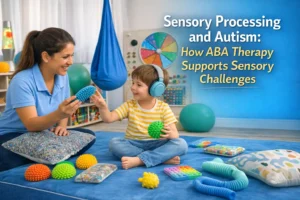
Sensory patterns often connect closely with behavior. Some children on the spectrum are highly sensitive to sounds, lights, textures, or smells. Your 2-year-old might cover their ears at everyday noises, refuse certain clothes due to fabric texture, or become extremely upset during haircuts or nail trimming. Others seek more sensory input—watching spinning objects closely, pressing their bodies against people or furniture, or licking and smelling objects more than expected at this age. These sensory-seeking or sensory-avoiding behaviors don’t independently confirm autism; however, when they appear alongside social and communication differences, they provide professionals additional reasons to consider autism evaluation as part of comprehensive developmental review.
Play and Interaction Differences
Play reveals much about how a 2-year-old understands the world. Around this age, many toddlers begin simple pretend play—feeding a doll, making a toy animal “talk,” or pretending to drink from an empty cup. They imitate adults’ daily activities, like stirring a pot or talking on a toy phone. Children on the autism spectrum may enjoy toys but use them differently from peers, focusing more on specific parts or patterns than on shared imaginative games.
Social Play Patterns
A 2-year-old on the spectrum might prefer solitary play most of the time, even when other children are nearby. You might see them sitting close to other kids without joining their games, or walking away when others try to involve them. They may struggle with turn-taking or not notice when another child is upset or excited. While some children are naturally independent, limited interest in other children combined with social communication differences creates a more meaningful pattern. You might also notice your child doesn’t bring toys to show you, doesn’t look to you for reactions during play, or doesn’t copy your actions in simple games like rolling a ball back and forth.
Pretend Play Development
While many toddlers use their imagination in small but clear ways, some children on the spectrum show less pretend play or use toys in more repetitive patterns. Instead of feeding a doll or building a house with blocks, they may line blocks up in a specific order or spend long periods watching car wheels spin. This focused play can be calming and enjoyable for them but may limit opportunities to practice flexible thinking, communication, and shared play with others. No single behavior confirms autism, but these patterns contribute to the broader picture.
Play Pattern Comparison
| Area of Play | Typical Range at Age 2 | Possible Warning Signs at Age 2 |
| Social play | Plays near and sometimes with other children, may copy others | Plays mostly alone, little interest in peers, limited turn-taking |
| Pretend play | Simple make-believe games, uses objects as if they were something else | Little or no pretend play, uses toys mostly in repetitive or rigid ways |
| Use of toys | Explores toys in different ways, varies actions over time | Lines up toys, focuses on one part, repeats the same action for extended periods |
| Sharing play | Brings toys to show caregivers, looks for your reaction | Rarely shows or shares toys, limited joint attention |
Your child doesn’t need to fit perfectly into one column. You may observe some typical play and something that raises questions. When you notice several possible warning signs across social communication, behavior, and play together, that combination typically guides professionals to recommend autism evaluation.
When to Seek an Autism Evaluation
Many parents ask when concern should prompt evaluation. While there’s no single perfect moment for every child, guidelines can help you move from observation to action. You don’t need complete certainty. Professional organizations encourage early screening and referrals whenever clear concerns exist, even with some uncertainty.
Recommended Screening Timeline
The American Academy of Pediatrics recommends all children receive autism-specific screening during routine well-child visits at 18 months and 24 months, plus ongoing developmental monitoring. By age two, your pediatrician should have asked about your child’s communication, social interaction, and behavior, possibly using standardized questionnaires to check for developmental red flags. If screenings suggest higher likelihood of autism or another developmental difference, the next step is detailed diagnostic evaluation by specialists—psychologists, developmental pediatricians, or speech and language professionals.
When to Request Evaluation
Consider requesting evaluation if you observe several of these patterns occurring frequently over time:
- Your child rarely responds to their name, even when you know they can hear you
- Your child uses very few words or doesn’t combine words into simple phrases by 24 months
- Your child rarely points to show you things or ask for help
- Your child shows little interest in playing with other children or sharing experiences with you
- Your child displays repetitive movements, intense routines, or extreme distress with small changes
- Your child loses previously acquired skills, such as words, gestures, or social engagement
If you recognize several signs affecting daily life, schedule an appointment specifically to discuss them. Bring notes with examples from home, short videos from playtime, or descriptions from daycare or relatives who see your child regularly. State clearly that you’re concerned about possible autism and would like formal screening or a referral for full evaluation. If your concerns persist and feel unaddressed, seeking another opinion is reasonable. You know your child best, and your observations are essential to the process.
What to Do If You Notice These Signs
Noticing early signs of autism in your 2-year-old can bring mixed emotions. You might worry about your child’s future or feel overwhelmed by the prospect of evaluations and therapies. Remember that autism is a neurodevelopmental difference that begins in the brain long before parents notice behaviors, and it’s not caused by anything you did or didn’t do. What matters most is moving forward, one step at a time.
Organize Your Observations
Start by documenting what you see in a simple, practical way. Keep a notebook or phone note recording observations and timing. For example: “Doesn’t look when I call his name most days,” “Lines up cars every evening, gets upset if I move them,” or “Doesn’t use words to request things, pulls my hand instead.” Short videos of playtime, mealtimes, or daily routines give professionals clearer windows into your child’s behavior in familiar environments. These records make conversations with your pediatrician more concrete and less dependent on memory.
Practical Next Steps
You can follow these steps at a pace that feels manageable for your family:
- Write down your observations. Include examples of social interaction, communication, play, and behavior that concern you.
- Record short videos at home. Capture natural moments during play, meals, or routines showing how your child communicates and responds.
- Schedule a visit with your pediatrician. Request developmental and autism-specific screening at this appointment.
- Ask about hearing and other evaluations. Ensure hearing and general development are checked, since many factors affect speech and behavior.
- Learn about early intervention services in your area. In many regions, children under three can receive support for suspected developmental differences, even before formal autism diagnosis.
- Explore evidence-based supports such as ABA-based behavioral support. These programs focus on building skills in communication, social interaction, and daily routines.
This article cannot replace professional evaluation. The information here helps you recognize patterns, understand what professionals look for, and ask informed questions. For specific concerns about your child, always speak directly with your pediatrician or another qualified specialist who can evaluate your child in person and guide you to appropriate services.
If your child has received a diagnosis or your pediatrician has recommended early behavioral services, RenaSer ABA Therapy can work with your family to create an individualized behavioral support plan. This includes goals for communication, daily routines, social interaction, and reducing behaviors that make everyday life challenging. The goal isn’t to change who your child is, but to help them access skills and support that make daily life more comfortable and meaningful.
Understanding That Every Child Is Different
Autism is a spectrum, meaning no two children look exactly the same. Some 2-year-olds may have clear delays in speech and social interaction with noticeable repetitive behaviors. Others may speak on time or even early, yet struggle with understanding social rules, sharing attention, or coping with routine changes. Some children develop typically for a period and then lose words or social interest between 15 and 30 months, which can be especially confusing for families.
Recognizing Diversity on the Spectrum
Because of this variety, avoid comparing your child too closely with a single checklist or with another child who has an autism diagnosis. Two children on the spectrum can have very different strengths and challenges. One might love hugs and physical play but struggle to use words to communicate, while another might speak in full sentences but find eye contact uncomfortable and have strong sensory sensitivities. Some children have obvious repetitive actions, such as hand flapping or spinning; others have more subtle routines. These patterns don’t make one child “more” or “less” on the spectrum; they demonstrate how wide and diverse the spectrum is.
Building on Strengths
As you notice possible early signs, pay equal attention to your child’s strengths and interests. Many children on the spectrum show remarkable abilities—strong memory for details, deep focus on topics they love, or creative problem-solving approaches. When you and your support team build on these strengths, you help your child feel seen and valued, not defined only by challenges. Identifying autism, when present, doesn’t remove your child’s potential. It can open doors to understanding, services, and strategies that make daily life more manageable and more joyful for your whole family.
Moving Forward
This journey naturally brings ups and downs. You may move between hope and concern many times. Offer yourself the same compassion you’d offer a friend in your situation. You don’t have to make every decision today, and you don’t have to walk this path alone. Surround yourself with professionals who listen to your concerns, explain things clearly, and respect your family’s values and culture. Talk with other parents when ready and give yourself permission to rest when needed.
If you’re seeing several of the signs described in this article and live near West Palm Beach, RenaSer ABA Therapy is available to support you. Our team can help you understand what evaluation may involve, what ABA-based behavioral support can look like for a 2-year-old, and how to design a plan that supports your child’s communication, connection, and daily life while respecting who they are. Reaching out for information isn’t a commitment to start therapy immediately, it’s a step toward clarity and support for you and your child.